The History of Osaka Aquarium Kaiyukan
When Osaka Aquarium Kaiyukan (海遊館) opened in 1990, it was the largest aquarium in the world — and unlike anything built before it. This is the story of how a working harbor on Osaka Bay became a museum of the entire Pacific Ocean: who imagined it, who built it, and why a whale shark swims at its very centre. Plan your visit and book Osaka Aquarium tickets.
A museum of the Pacific Ocean, opened in 1990
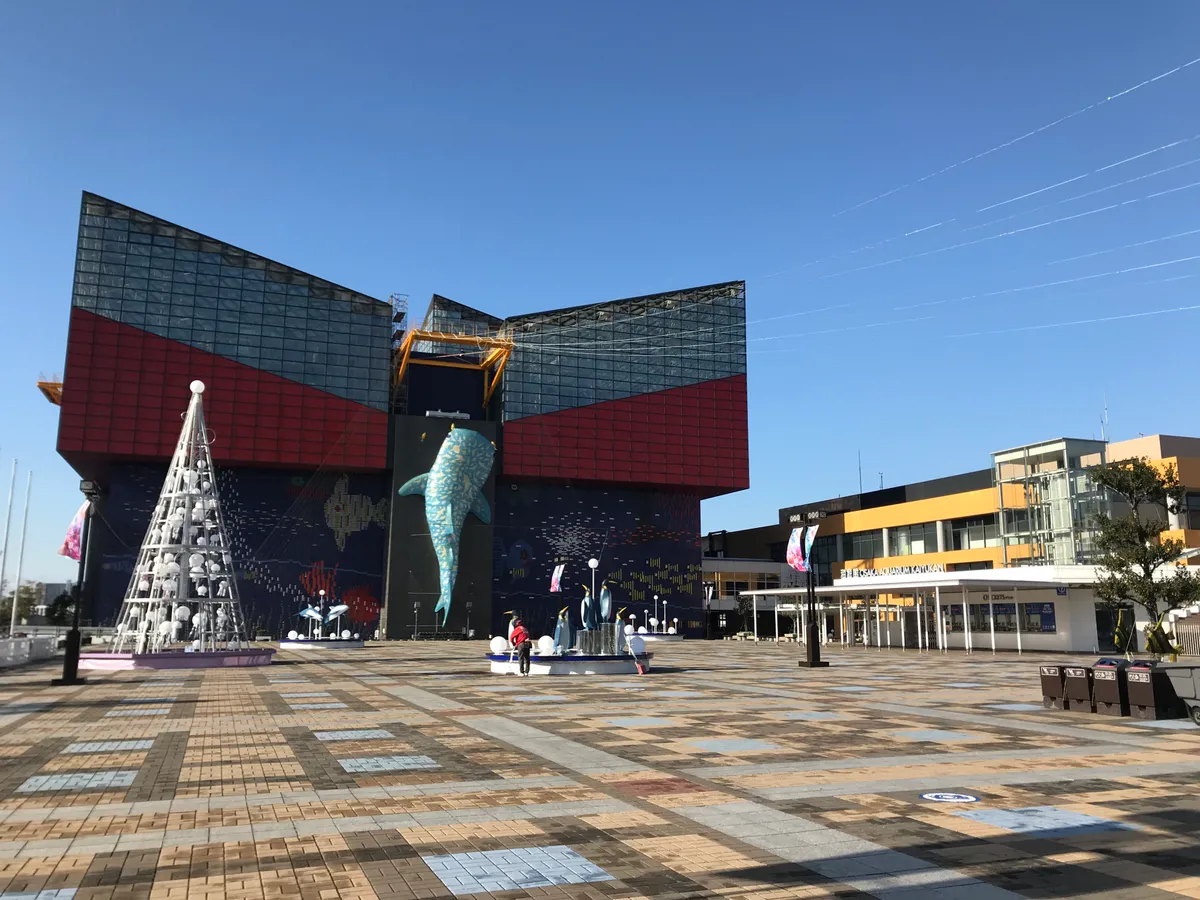
Osaka Aquarium (海遊館) opened its doors on 20 July 1990 in the Tempozan district of Osaka's Minato ward, on the edge of Osaka Bay. From the first day it was a phenomenon. Crowds arrived in numbers no Japanese aquarium had ever seen: one million visitors passed through within roughly 40 days, two million by the hundredth day, and 5.6 million in the first year alone — a national record at the time.
What drew them was not just a collection of fish. The aquarium was conceived as something closer to a journey: a single, continuous walk through the living ecosystems of the entire Pacific Rim, built around one of the largest aquarium tanks ever constructed. When it opened, it was widely described as the biggest public aquarium on Earth.
Osaka Aquarium Kaiyukan: key facts
The essentials at a glance:
| Opened | 20 July 1990 |
| Architect | Peter Chermayeff (Cambridge Seven Associates) |
| Location | Tempozan, Osaka Bay, Japan |
| Building | 8 floors, walked top-to-bottom on a descending spiral |
| Central tank | ≈9 m deep · ≈5,400 tonnes of water |
| Signature animals | Whale sharks — the largest fish in the sea |
| First-year visitors | 5.6 million (a national record) |
| Theme | The Pacific "Ring of Fire" / "Ring of Life" |
The idea: the Pacific "Ring of Fire"
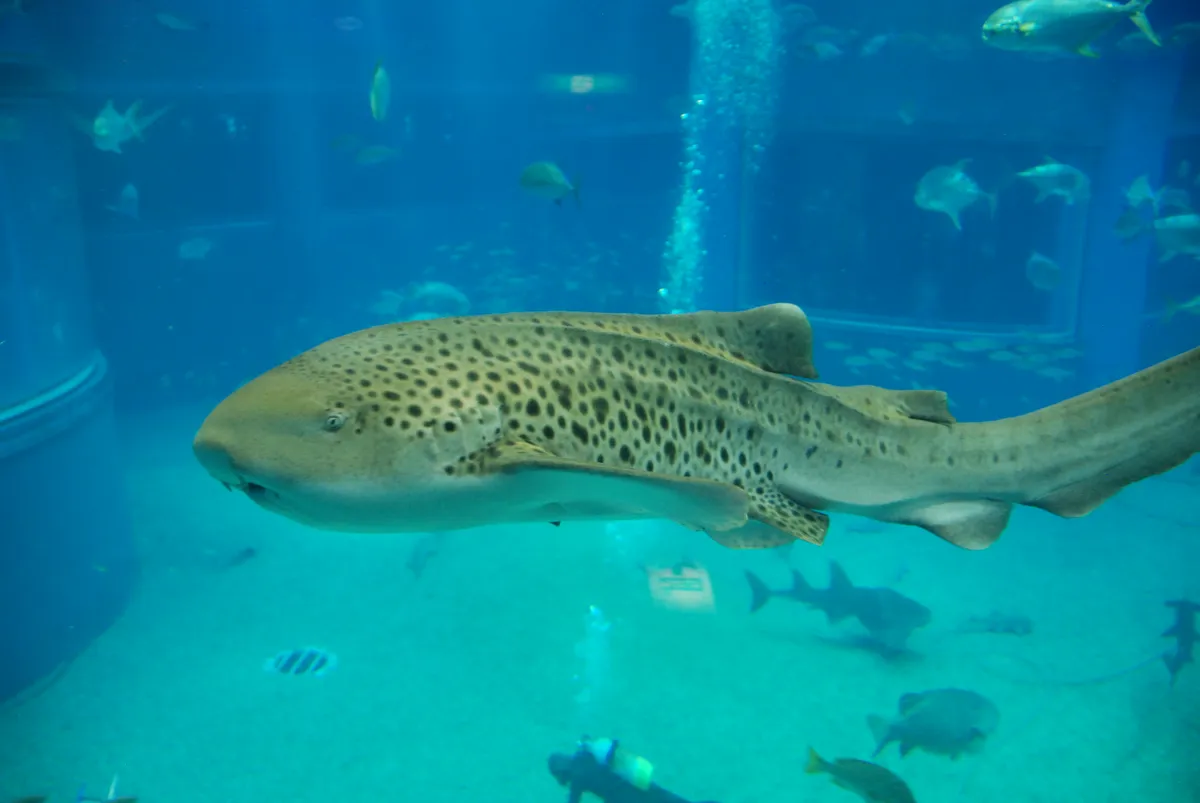
The aquarium is organised around a single powerful idea: the Pacific "Ring of Fire" — the great horseshoe of volcanoes and tectonic activity that outlines the Pacific Basin. That same volcanic rim happens to coincide with the richest concentrations of marine life on the planet, which the designers called the "Ring of Life." The building recreates real places along that rim, from the Aleutian Islands and Monterey Bay to the Great Barrier Reef, Antarctica and the deep waters off Japan.
The aquarium is often described as having been shaped by the Gaia hypothesis — James Lovelock's idea that the planet's living things and their environment form a single, self-regulating system. Whether or not visitors know the theory, the message is built into the architecture: every tank is part of one connected ocean, and you experience them as a single descending journey rather than a series of isolated exhibits.
The powerful organizing metaphor of the Ring of Fire — a linear zone of volcanic and tectonic activity outlining the Pacific Basin, corresponding to rich habitats and communities of animals.
— CambridgeSeven, describing the aquarium's design (project page)
The Pacific Rim, one ecosystem at a time
Following the spiral downward, visitors move through faithful recreations of real habitats from right around the Pacific Rim — each with its own water temperature, light and inhabitants. The journey takes you through:
- Japan Forest — a freshwater stream and woodland at the very top
- Aleutian Islands — the cold northern reaches of the Pacific
- Monterey Bay — playful sea otters among the kelp
- Gulf of Panama & Ecuadorian rainforest — tropical shallows and jungle
- Antarctica — penguins on the ice
- Tasman Sea & Great Barrier Reef — dolphins, rays and living coral
- Japan Deeps — the cold, dark waters off the Japanese coast
- The Pacific Ocean — the colossal central tank that ties it all together
The architect: Peter Chermayeff
The vision behind the aquarium belongs largely to the American architect Peter Chermayeff, who led the concept, architecture and exhibit design while at the Boston firm Cambridge Seven Associates (today CambridgeSeven). Chermayeff is one of the most influential aquarium designers in history — his studio also shaped landmark aquariums in Boston, Baltimore, Genoa, Lisbon and Chattanooga. Osaka is widely considered one of his masterpieces. The bold, mosaic-like mural that wraps the building's exterior is credited to his father, the modernist designer Serge Chermayeff.
For Chermayeff, an aquarium was never just an engineering problem. He has described his life's work as a way of using animals and space to change how people feel about the natural world.
It became, for me, place-making with a purpose, driven by content and context.
— Peter Chermayeff, Harvard Graduate School of Design, 2025
Building Tempozan: turning a working harbor into a destination
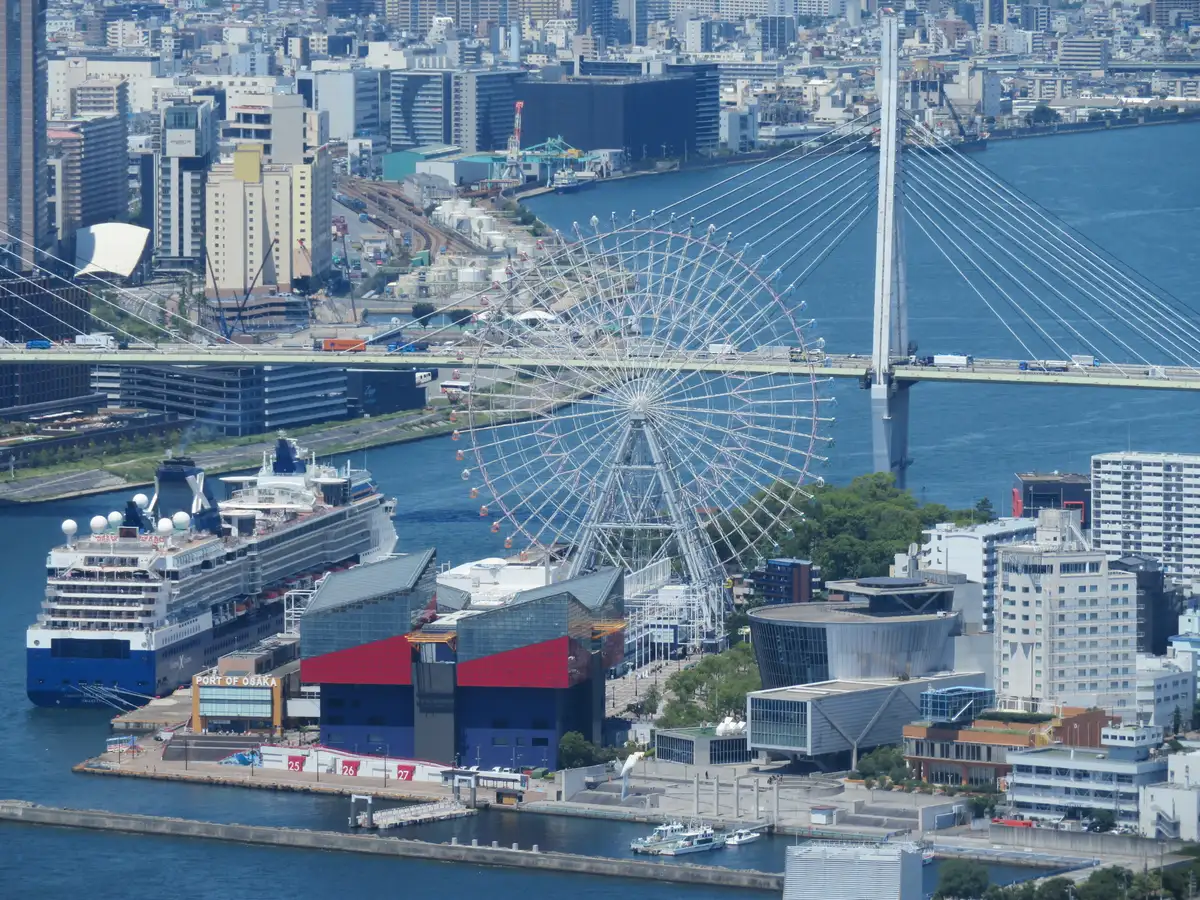
The aquarium was the centrepiece of Tempozan Harbor Village, a project to transform a tired stretch of Osaka's industrial waterfront into a cultural destination. The aquarium was built alongside what would become a giant Ferris wheel and a waterfront marketplace, giving the city a new reason to come to the bay.
The building itself — eight storeys clad in that vivid facade — was designed to be walked from the top down. Visitors ride an escalator to the eighth floor and then spiral slowly downward around the central tank, as if descending through the layers of the ocean from sunlit surface to cold, dark depths. It was a radically different idea from the flat, room-to-room aquariums most people knew, and it turned the simple act of moving through the building into part of the story.
The heart of it all: the Pacific Ocean tank
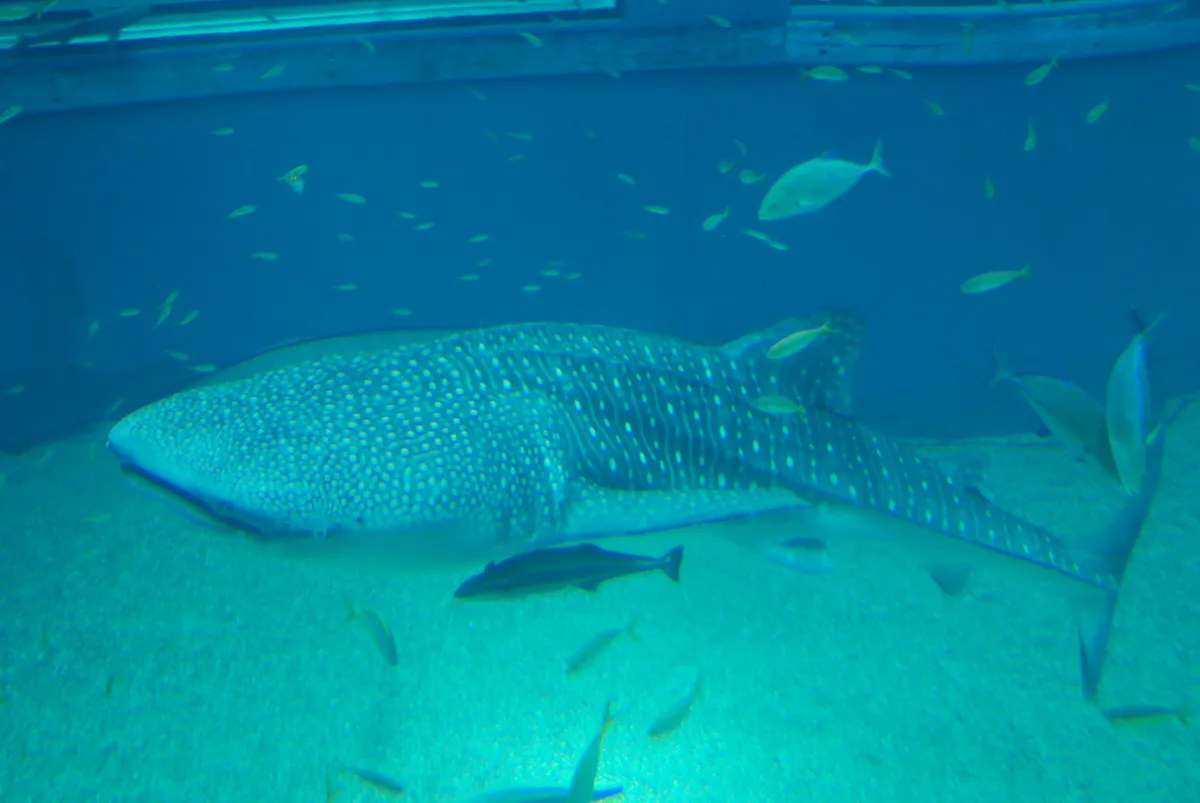
At the core of the building is the "Pacific Ocean" tank, one of the largest aquarium tanks in the world. As you spiral down the building you meet it again and again from different depths and angles, so the same body of water reads completely differently on each floor.
Building it was a feat of engineering in its own right. The acrylic panels that hold back the water were so large and so numerous that the project reportedly consumed a significant share of the world's annual acrylic production at the time, with the biggest single panel measuring roughly six by five metres and weighing about ten tonnes.
- Depth: about 9 metres
- Volume: roughly 5,400 tonnes of water (about 5.4 million litres)
- Residents: whale sharks, manta rays, hammerhead sharks, Pacific bluefin tuna and more
- Experience: viewable from multiple floors as you descend the spiral route
Kai and Yuu: the whale sharks of Osaka
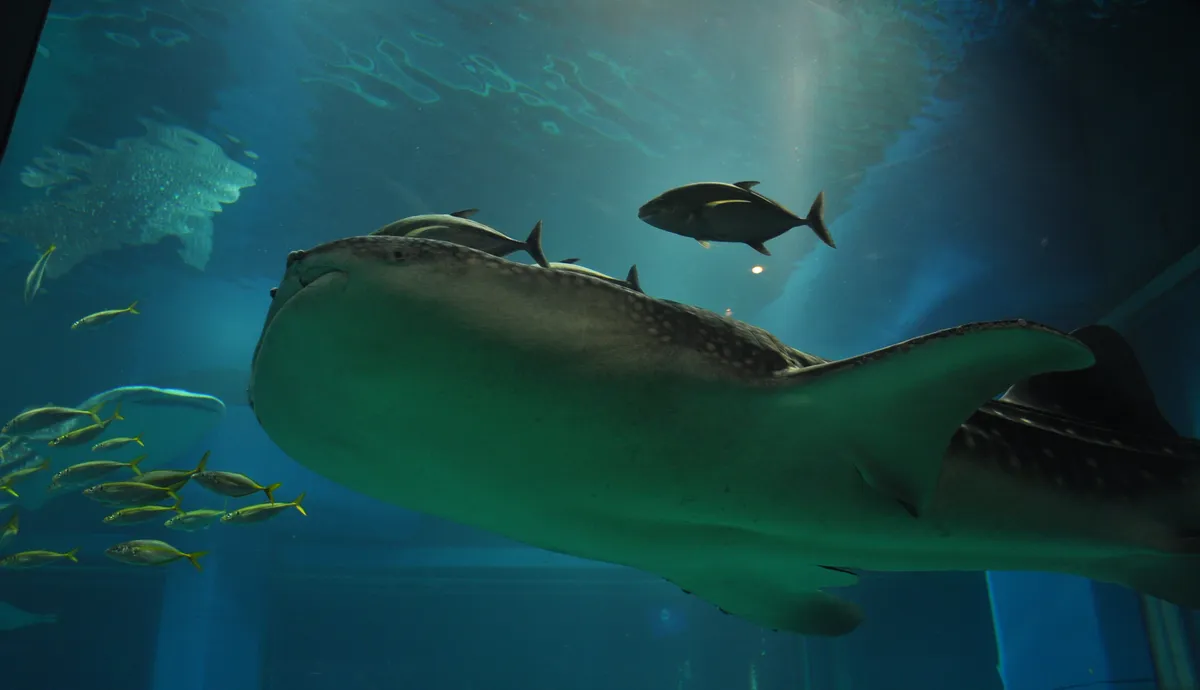
More than any single exhibit, the aquarium became famous for its whale sharks — the largest fish in the sea, kept in that vast central tank. By tradition the aquarium's male whale sharks are given names based on "Kai" and the females on "Yuu," echoing the aquarium's Japanese name, 海遊館 (Kaiyukan). Keeping animals of this size was, and remains, extraordinarily rare; the aquarium's research arm has tracked tagged whale sharks migrating thousands of kilometres across the Pacific.
That blend of spectacle and science was deliberate. Chermayeff designed the marine-mammal habitats with varied contours rather than plain rectangular tanks — a small detail meant to improve the animals' lives, not just the view.
An invitation to Japan to do more than celebrate the esthetics of nature [and] begin to participate in its protection.
— Peter Chermayeff, in Newsweek, 1990
From opening day to 85 million visitors
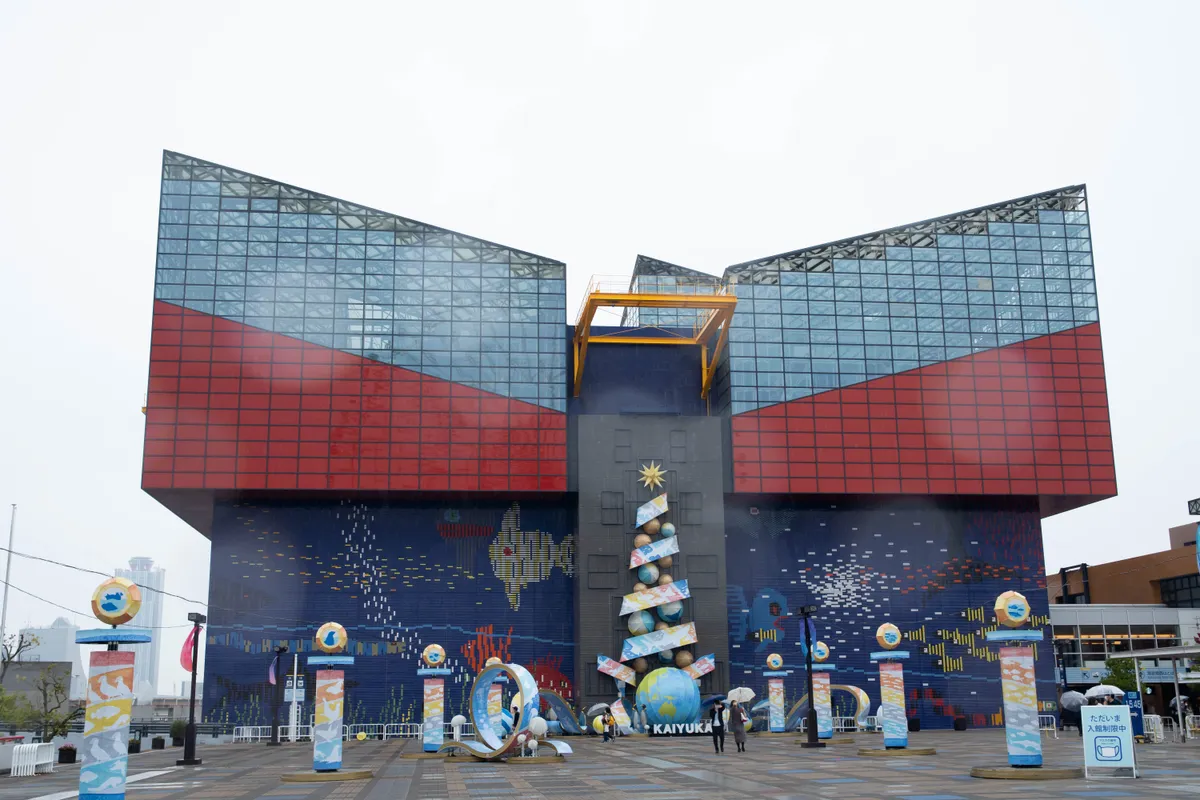
The aquarium never lost its crowds. It reached 50 million cumulative visitors by 2008 — the fastest any Japanese aquarium had ever done so — and has since passed 75 million, becoming the most-visited aquarium in Japan, and tens of millions more beyond that.
The aquarium has also kept evolving rather than standing still:
- 1998: the "Aqua Gate" entrance tunnel and a jellyfish gallery were added
- 2013: a new interactive area opened with Arctic, Falkland Islands and Maldives zones, including a hands-on touch pool
- 2020: the aquarium marked its 30th anniversary, with a renovated museum shop and refreshed exhibits
Osaka Aquarium Kaiyukan today
More than thirty years after it opened, the aquarium is still doing exactly what its designers intended: walking visitors through the living Pacific, one ecosystem at a time, with a whale shark at the centre of it all. It remains one of the largest and most admired aquariums in the world, and one of Osaka's defining attractions — a building that turned a stretch of industrial harbor into a place hundreds of millions of people have chosen to visit.
If this story makes you want to see it for yourself, the practical details are below.
Where to buy Osaka Aquarium tickets
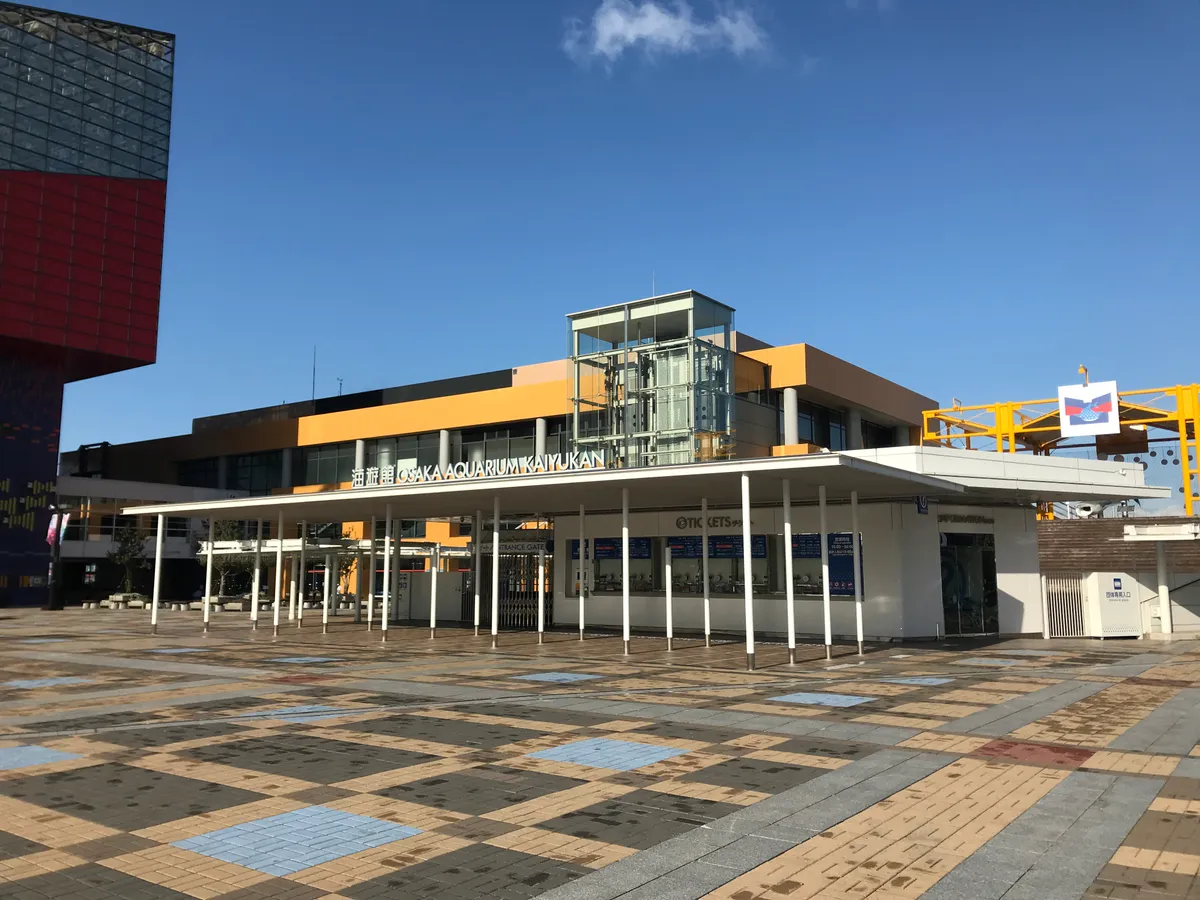
The aquarium is open daily and sits about a five-minute walk from Osakako Station on the Osaka Metro Chuo Line. On busy days — weekends, Japanese holidays and school breaks — the on-site ticket queue can be long, so most visitors now book a timed-entry ticket online before they arrive.
The easiest way to do that is through a verified ticketing partner, which lets you reserve a date and skip the box-office line. Check current Osaka Aquarium ticket prices and availability, or see our full Osaka Aquarium visitor guide and ticket options for hours, prices and tips on the best time to go.
About this guide
This website is an independent visitor guide. It is not operated by, affiliated with, authorised by, sponsored by, or endorsed by the aquarium or its operator, Osaka Aquarium Kaiyukan Co., Ltd. The attraction's official name is 海遊館 and its only official website is kaiyukan.com.
We do not sell admission tickets and we are not an agent of the aquarium: any ticket you book through a link here is sold by a third-party platform under its own terms. All names, marks and logos referring to the attraction belong to their owner and are used here only to describe the place this guide is about.
Osaka Aquarium history: frequently asked questions
When did Osaka Aquarium Kaiyukan open?
Osaka Aquarium Kaiyukan opened on 20 July 1990. When it opened it was the largest public aquarium in the world, drawing around one million visitors in its first 40 days and 5.6 million in its first year.
Who designed Osaka Aquarium Kaiyukan?
It was designed by the American architect Peter Chermayeff while at the firm Cambridge Seven Associates (now CambridgeSeven). Chermayeff is one of the world's most renowned aquarium designers, also responsible for major aquariums in Boston, Baltimore, Genoa and Lisbon. The exterior mural is credited to his father, designer Serge Chermayeff.
Why is Osaka Aquarium built around the "Ring of Fire"?
The aquarium recreates the ecosystems of the Pacific "Ring of Fire" — the volcanic belt circling the Pacific Ocean — because that same region holds some of the richest marine life on Earth, which the designers called the "Ring of Life." Visitors descend a spiral route past habitats from the Aleutian Islands to Antarctica, all linked around one giant central tank.
How big is the central tank, and what lives in it?
The central "Pacific Ocean" tank is about 9 metres deep and holds roughly 5,400 tonnes of water, making it one of the largest aquarium tanks in the world. It is home to whale sharks — the largest fish in the sea — along with manta rays, hammerhead sharks and Pacific bluefin tuna.
Where can I buy tickets for Osaka Aquarium Kaiyukan?
Most visitors book a timed-entry ticket online to skip the on-site queue. You can check current ticket prices and availability here, or read our full Osaka Aquarium visitor guide for hours, prices and the best times to visit.