How Long Does Osaka Aquarium Take, and When Is the Best Time to Go?
Most visitors spend 2 to 3 hours at Osaka Aquarium Kaiyukan (海遊館). A brisk walk down the full route takes about 90 minutes, and families with young children who stop at the penguins and the touch pool should plan 3 to 4 hours. The quietest window is a weekday morning right at opening, and again after 17:00 when the lighting and music change for the evening. This guide covers how long each type of visitor should budget, the 2026 crowd calendar, the evening visit, tickets and bags, and when in the day and week to go.
Quick answer
Most visitors spend 2 to 3 hours at Osaka Aquarium. A brisk walk down the full route takes about 90 minutes, and families who linger with young kids need 3 to 4 hours. The quietest time is a weekday morning at opening, or after 17:00 in the evening.
Key takeaways
- Plan 2 to 3 hours for a normal visit, about 90 minutes at a brisk pace, longer if you stop for feedings or the touch pool
- Families with kids should budget 3 to 4 hours, not the 90-minute solo-visitor pace
- Weekday mornings at opening and evenings after 17:00 are the two genuinely quiet windows
- Golden Week 2026 runs Wednesday, April 29 through Wednesday, May 6, with the solid holiday block from May 2 to May 6
- A weekday ticket is not only quieter, it also runs roughly ¥300 cheaper per adult than the same visit on a Saturday
- If your date is fixed on a busy weekend, the skip-the-line bundle is worth the extra to avoid the gate queue
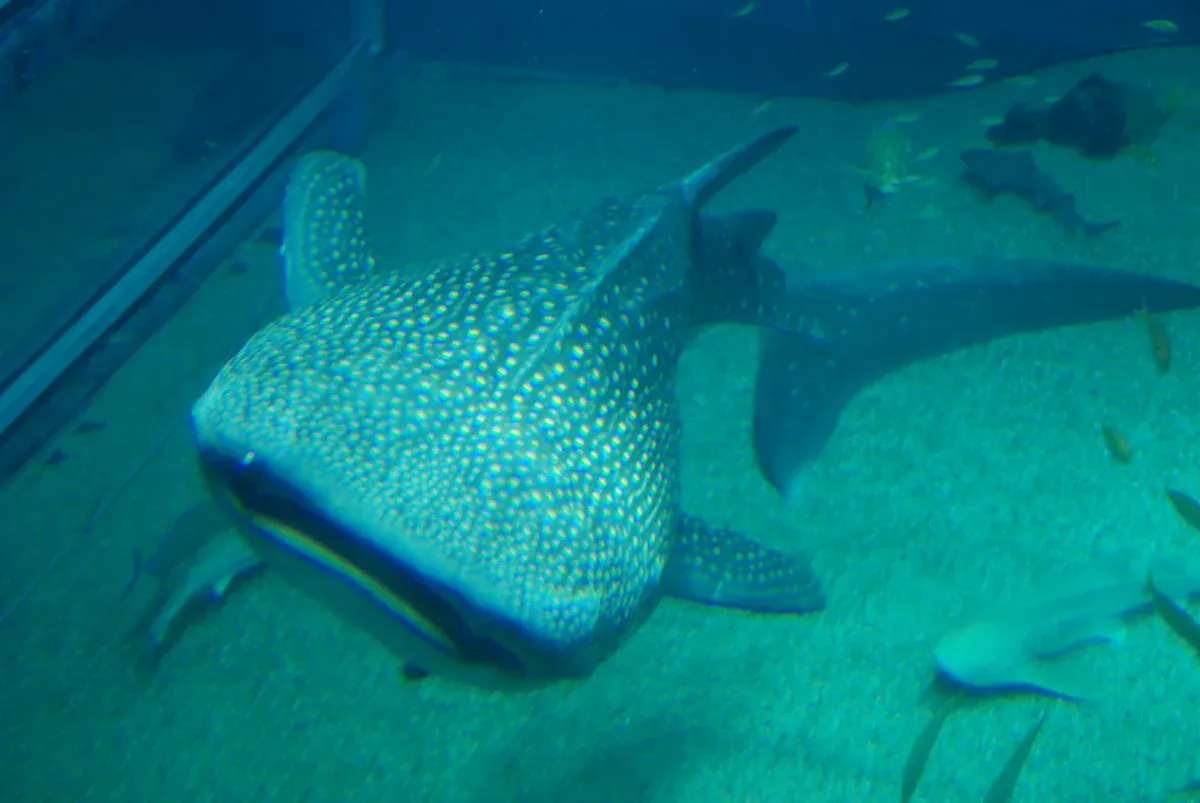
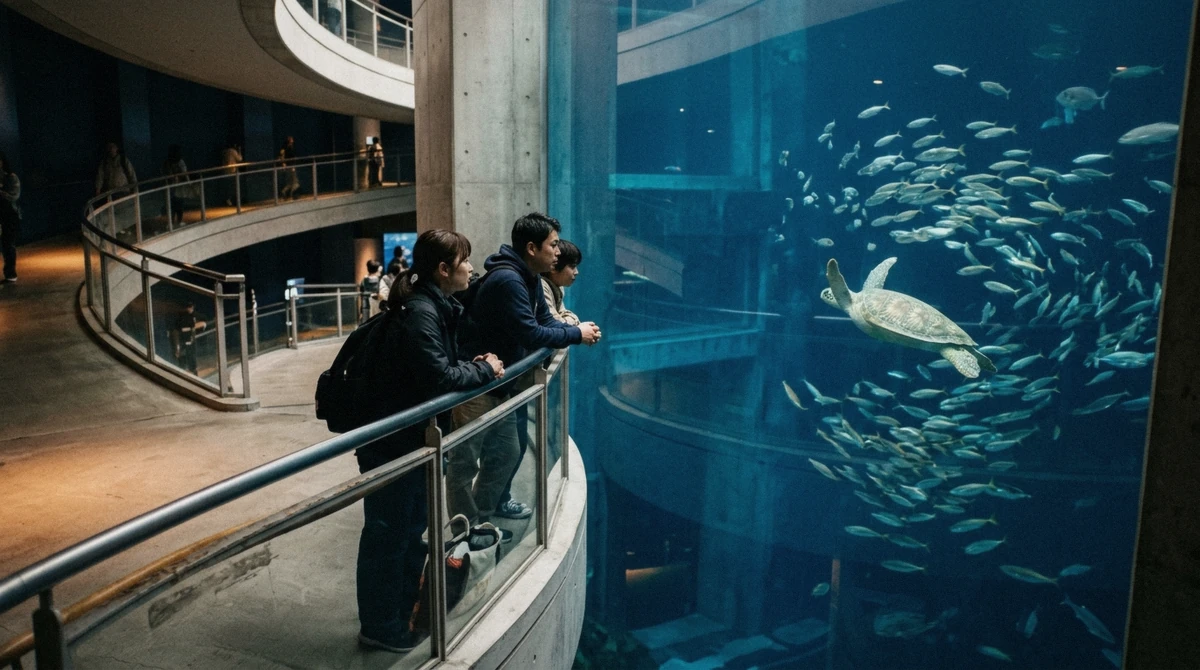
The central tank is where almost everyone slows down. Photo: Maarten Heerlien, CC BY 2.0, via Wikimedia Commons
How Long a Visit Really Takes
The route itself starts on the 8th floor and spirals down through roughly 15 zones to the ground level, following the Pacific Ocean tank at the center. How long that takes depends almost entirely on who is walking it.
| Visitor type | Typical duration | Why |
|---|---|---|
| Solo or couple, moving briskly | About 90 minutes | The full descending route without lingering at any one tank |
| Typical first visit | 2 to 3 hours | Time at the main tank, the penguins and the jellyfish, plus the gift shop on the way out |
| Slow pace, photos and reading panels | 3 hours | Time added at each major tank and a feeding round |
| Family with young children | 3 to 4 hours | Extra time at the penguins and the Maldives touch pool, plus stroller pacing and breaks |
| Repeat or enthusiast visitor | 3 hours or more | Waiting for feeding rounds at specific tanks and doubling back through favourite zones |
If you only have a tight window, 90 minutes is genuinely enough to see the full route, including the whale sharks in the main tank. If you have a free afternoon, giving it 3 hours lets you catch at least one feeding round without rushing the rest of the visit.
The route itself is not evenly paced. The upper floors move quickly, since the early zones are smaller tanks meant as a build-up rather than a destination. The middle stretch, where the Pacific Ocean tank comes into view from multiple levels, is where almost everyone slows down regardless of how briskly they started.
Budgeting extra time specifically for that middle section, rather than spreading your total time evenly across the whole route, matches how the building is actually laid out.

The penguins are where a 90-minute walk turns into a 3-hour visit with kids. Photo: Insightwm, CC BY-SA 4.0, via Wikimedia Commons
Why Mornings Feel So Different From Midday
The gap between a 10:00 arrival and a midday one is not just a vague sense of more people around, it comes from a real, predictable pattern. Group tours and coach arrivals tend to land through the late morning, and school and family groups build through early afternoon once the day is underway elsewhere in Osaka. The first hour after opening sits before both of those patterns kick in, which is the actual mechanism behind why it feels so different, not just good luck.
- First hour after opening: mostly independent visitors, before coach groups arrive
- Late morning to mid-afternoon: coach tours and family groups overlap, the genuine peak
- After 17:00: day-trip visitors have largely departed for dinner or the next stop on their itinerary, leaving a smaller, calmer crowd
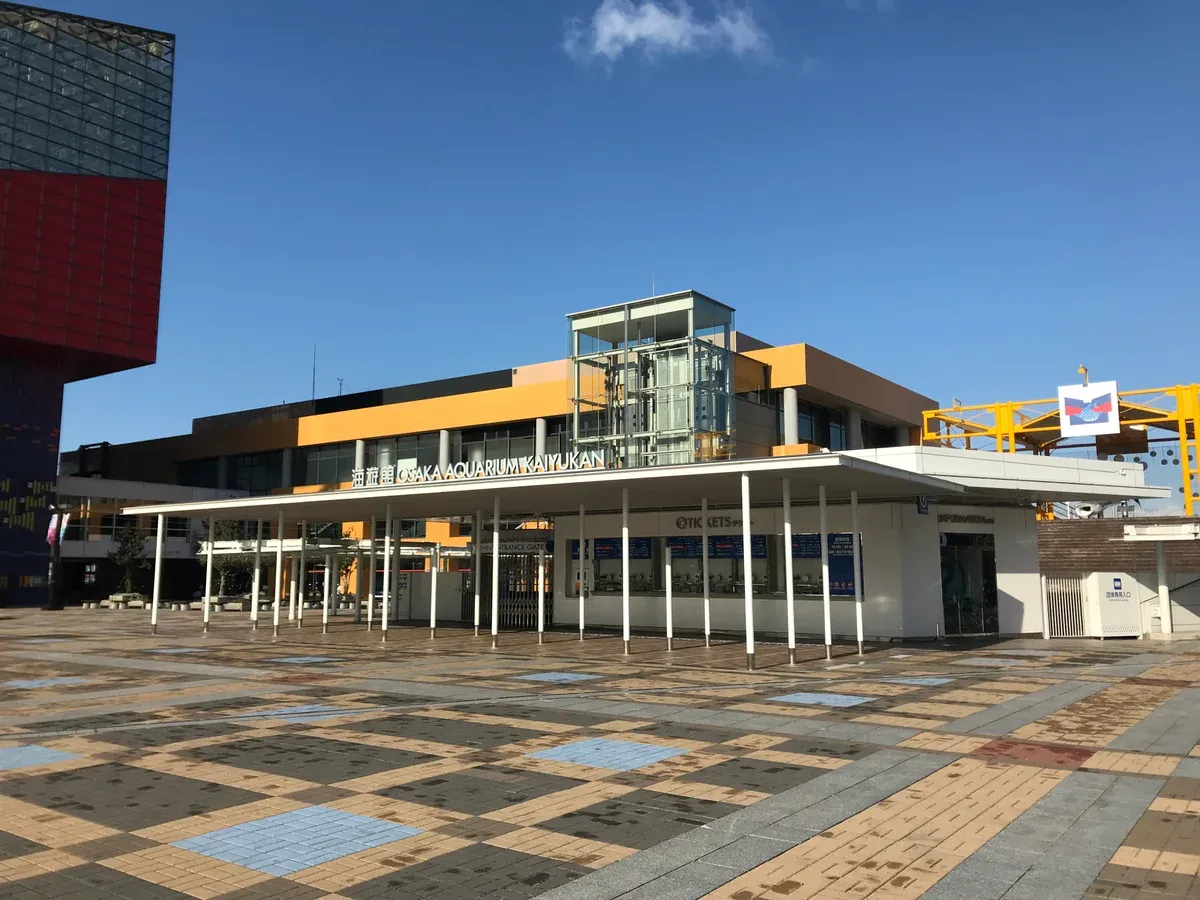
The entrance plaza, where the opening queue forms. Photo: そらみみ, CC BY-SA 4.0, via Wikimedia Commons
Best Time of Day
Two windows stand out clearly from the rest of the day. Right at opening, usually 10:00, the aquarium is at its emptiest, and the first hour gives you a genuinely uncrowded walk down the spiral route before tour groups and families arrive later in the morning. The second window is the evening, after 17:00, when the lighting through the building shifts to a dimmer, more atmospheric mood and the day-trip crowd has largely thinned out.
Osaka Aquarium usually runs 10:00 to 20:00, with last entry at 19:00, one hour before closing. During Golden Week, Obon and other peak periods, opening can shift earlier, to 8:30 or 9:30, so check the official calendar close to your dates rather than assuming the usual 10:00 start.
- Opening hour, around 10:00: the quietest stretch of the whole day
- Late morning to mid-afternoon: the busiest window, especially on weekends and school holidays
- After 17:00: the second quiet window, with a genuinely different evening atmosphere in the lighting
- Last entry is 19:00, one hour before the usual 20:00 closing
Is Osaka Aquarium Better at Night?
For a calmer visit, often yes. From 17:00 the lighting and music inside the building change to an evening mood, which the aquarium calls Night Kaiyukan, and the day-trip crowd has mostly left. The evening session runs 17:00 to 20:00 with last entry at 19:00, though the aquarium shifts these times by season, so check the day's hours before you go.
For a long evening, Solaniwa Onsen is a short Chuo Line ride away.
- Enter around 17:00 to keep a full 2 hours before closing
- The dim light suits the jellyfish and the main tank, but makes fast whale shark photos harder
- Last entry at 19:00 leaves only an hour, enough for a brisk walk but not the full visit
Source: Osaka Aquarium Kaiyukan.
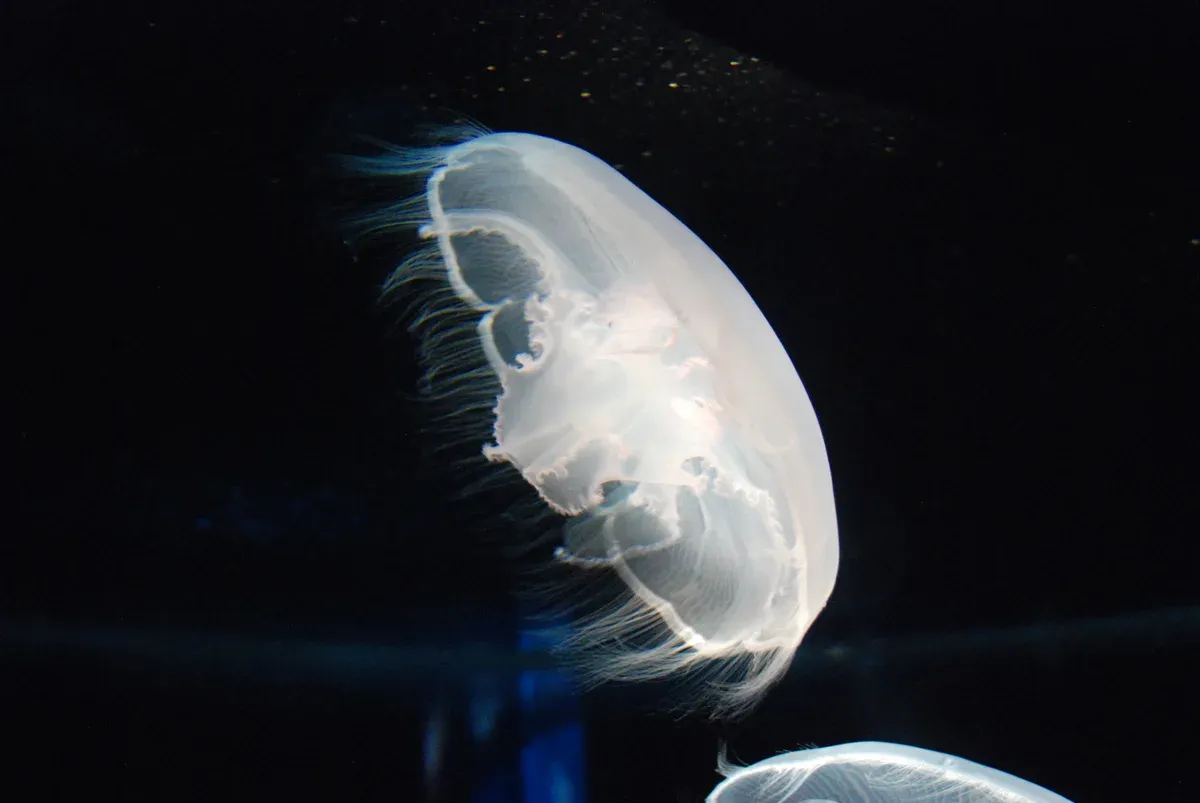
The jellyfish tanks suit the dimmer evening light. Photo: Maarten Heerlien, CC BY 2.0, via Wikimedia Commons
Best Day of the Week
Weekdays beat weekends on every measure that matters: crowd size, queue length, and price. Because Osaka Aquarium's admission is date-based, shifting a visit from a Saturday to a Tuesday saves roughly ¥300 per adult on top of shorter lines at the gate and inside the busiest zones. If your schedule allows any flexibility at all, a weekday morning is the single best combination of quiet and cheap available on the calendar.
Monday through Thursday tend to run closest to each other in crowd level, with Friday starting to pick up as the weekend approaches. Sunday is typically the busiest single day of an ordinary, non-holiday week, ahead of Saturday, since it is the last chance for many local visitors before the work week resumes. If you can only choose one weekday, avoiding Friday afternoon and Monday morning school-group blocks nudges the odds further in your favour.

Ringed seals in the Arctic zone. Photo: Kingfisher, CC BY-SA 3.0, via Wikimedia Commons
Crowd Calendar: Golden Week, Obon and School Holidays
A handful of named weeks on the 2026 calendar genuinely change the visit, and they are worth planning around rather than discovering at the gate.
| Period | 2026 dates | Crowd level | Our advice |
|---|---|---|---|
| Golden Week | Wednesday, April 29 to Wednesday, May 6 | Peak, especially May 2 to May 6 | Go right at the 10:00 opening or plan an evening visit instead; this window overlaps with the seasonal nemophila flower day trip, so expect the aquarium's afternoon stop to run busier than usual |
| Obon | August 13 to August 16, with peak domestic travel August 8 to August 16 | Very high, one of the busiest stretches of the year | Book a timed e-ticket well ahead and avoid midday entirely |
| Ordinary school holidays and long weekends | Varies through the year | Elevated but manageable | Opening or evening slots still work well |
| Ordinary weekday, outside named holiday weeks | Most of the calendar | Low to moderate | Any time of day is comfortable |
Outside those named weeks, an ordinary weekday stays comfortable at almost any hour. Note that this is an indoor venue, so rainy days actually push crowds up rather than down, since visitors reroute indoor plans toward the aquarium on a wet forecast.
Cruise-ship arrival days at nearby Osaka port can also add a short-lived bump to the crowd, usually concentrated in a single busy window rather than the whole day. If your dates happen to fall inside one of the named peak weeks above and you cannot move them, the two-window rule still holds, opening hour or after 17:00 remain the two calmest stretches even during Golden Week or Obon itself, they are simply calmer relative to a busier baseline rather than genuinely quiet.
Timing Your Visit Around Feeding Rounds
Feeding times shift slightly day to day and are posted on a board at the entrance, but the general pattern runs mid-morning and mid-afternoon across the main tanks, with the whale shark feeding typically around 10:30, penguins fed late morning and mid-afternoon, the Japan Forest otters late morning and afternoon, and the ringed seals late morning and mid-afternoon, with the day's times on the aquarium's feeding-time page. If catching a feeding round matters to you, arriving close to opening and checking the day's posted schedule immediately lets you plan the rest of the route around it rather than backtracking later. Treat these times as a guide rather than a promise, since keepers adjust the schedule around the animals' actual needs on any given day.
Our whale shark guide covers the full feeding schedule and what to expect at the main tank in detail.
Best Slot by Traveler Type
If you're visiting solo or as a couple with limited time
go right at 10:00 opening on a weekday, you can walk the full route in 90 minutes with almost no crowd.
If you have young children
budget a full 3 to 4 hours and aim for a weekday morning, since a tired, crowded afternoon is the harder combination for kids.
If you want the evening atmosphere without the daytime crowd
arrive after 17:00, the lighting shifts and the building empties out well before the 19:00 last entry.
If your trip only overlaps with Golden Week or Obon
treat opening hour or the after-17:00 window as close to mandatory, midday during those weeks is the busiest stretch of the whole year.
If you want to catch a feeding round
arrive at opening and check the day's posted schedule immediately, the whale shark feeding typically runs around 10:30.
Tickets, Entry Times and Bags
A ticket bought at the counter on the day may not get you in at the time you want. When a slot is full, the aquarium asks you to wait until your entry time, which can eat into a morning plan. An e-ticket bought ahead for a chosen date and time lets you walk in with a QR code on your phone, and the skip-the-line ticket does the same on a busy weekend.
Our ticket guide compares the options.
Large luggage is not allowed inside. Anything over 120 cm across its three sides, or with one side longer than 70 cm, and umbrellas over 120 cm long have to go in a locker first. Strollers are fine.
Lockers sit near the aquarium entrance, in the Kaiyukan hall, by the museum shop, in Tempozan Market Place and under the Giant Ferris Wheel, and the ones in the hall and by the shop can be used without a ticket.
Source: Osaka Aquarium Kaiyukan tickets, Osaka Aquarium Kaiyukan rules, Osaka Aquarium Kaiyukan access.
So, When Should You Go?
A weekday morning at opening is the best all-round slot: the quietest hours of the day, the cheapest date band, and enough time before midday crowds build. The evening window after 17:00 is a close runner-up with its own different atmosphere, worth choosing if mornings do not fit your schedule. The stretch to avoid is midday during Golden Week or Obon, when both the crowds and the calendar price peak at the same time.
If your trip only has one available slot and it happens to fall on a Saturday afternoon in a peak week, do not cancel the plan, just adjust the expectation: budget the fuller 3-hour pace rather than 90 minutes, and lean on a timed e-ticket booked well ahead so at least the entry itself is not left to chance. Once your slot is picked, our Osaka Aquarium visiting guide compares the entry options and the day tours built around them.
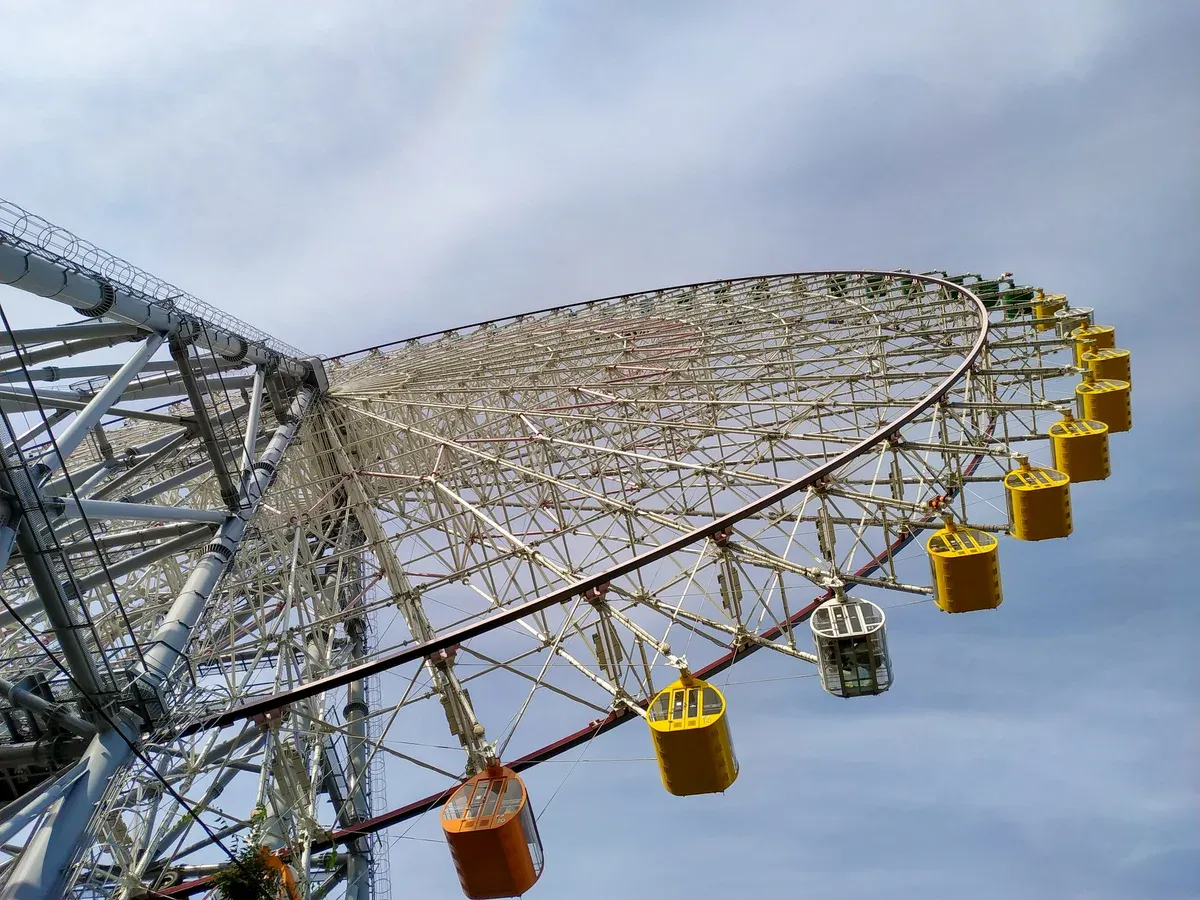
The Giant Ferris Wheel next door turns the visit into a half-day at Tempozan. Photo: Jason Zhang, CC BY-SA 3.0, via Wikimedia Commons
Is Osaka Aquarium Kaiyukan Worth It?
Yes, for most visitors Osaka Aquarium Kaiyukan is worth the admission, because ¥2,700 to ¥3,500 (about $17 to $22) for an adult buys a full 2 to 3 hours on a 15-zone route that spirals down around the whale shark tank. The answer changes only for a few kinds of visitor, so check the table before you buy.
| Your situation | Worth it? | Why |
|---|---|---|
| Family with children under 16 | Yes | Children aged 7 to 15 pay ¥1,400 (about $8.80), children aged 2 and under pay nothing, and the penguins and touch pool fill 3 to 4 hours |
| Rainy day in Osaka | Yes | Fully indoors, though a wet forecast pushes crowds up, so go at opening or after 17:00 |
| Solo or couple with a tight schedule | Yes, in 90 minutes | The full descending route including the whale sharks takes about 90 minutes at a brisk pace |
| Aquarium regular who has seen the big tanks | Maybe not | Repeat visitors mostly spend their time waiting for feeding rounds, so go only if a round or an exhibit is the reason |
| Visitor on a peak weekend with a flexible date | Not on that date | Moving to a weekday puts you in a cheaper date band and removes most of the queue |
The value is in how you time it. A weekday morning at the 10:00 opening gives the emptiest walk down the spiral, and the ticket guide shows which date bands cost least. If your date is fixed on a busy day, the skip-the-line ticket with a digital feeding-time guide costs $35 flat and saves the gate queue.
Visiting with young children is covered in the kids and rainy day guide.
Frequently Asked Questions
How long does Osaka Aquarium take?
Most visitors spend 2 to 3 hours. A brisk walk down the full route takes about 90 minutes, and families with young children should plan 3 to 4 hours.
Is 90 minutes really enough to see everything at Osaka Aquarium?
Yes, for a solo or brisk-paced couple, 90 minutes covers the full descending route including the whale sharks in the main tank. Families and anyone wanting to catch a feeding round should budget closer to 3 hours.
Is the aquarium quieter in the morning or the evening?
Both are quiet, in different ways. Right at the 10:00 opening is the emptiest stretch of the day, and after 17:00 the crowd thins again with a dimmer, more atmospheric lighting shift.
Which days of the week are busiest at Osaka Aquarium?
Weekends and named holiday weeks like Golden Week and Obon are the busiest. An ordinary weekday, outside those windows, stays comfortable at almost any hour.
When exactly is Golden Week in 2026?
Golden Week 2026 runs Wednesday, April 29 through Wednesday, May 6, with the densest holiday block from May 2 to May 6.
Does visiting on a weekday actually save money, not just crowds?
Yes. Because admission is priced by date, shifting from a Saturday to a Tuesday typically saves roughly ¥300 per adult on top of shorter queues.
Do rainy days make Osaka Aquarium more crowded?
Often, yes. Since it's an entirely indoor venue, a wet forecast tends to push visitors toward it as an indoor alternative, the opposite pattern from an outdoor attraction.
Should I plan my visit around a specific feeding time?
If a feeding round matters to you, arrive at opening and check the schedule posted at the entrance that day, since exact times shift daily. The whale shark feeding typically runs around 10:30, but always confirm the day's board.
Can I buy an Osaka Aquarium ticket on the day?
Yes, at the counter, but a same-day ticket may not get your preferred entry time, and you wait until your slot comes up. An e-ticket bought ahead for a set date and time avoids that, and the skip-the-line ticket is the easy option on a busy weekend.
Can I bring luggage into Osaka Aquarium?
Not large luggage. Bags over 120 cm across their three sides, or with a side over 70 cm, go in a locker first. Lockers are by the entrance, in the hall, by the museum shop, in Tempozan Market Place and under the Giant Ferris Wheel. Strollers are allowed.
Is Osaka Aquarium Kaiyukan worth the ticket price?
Yes for most visitors. An adult ticket runs ¥2,700 to ¥3,500 (about $17 to $22) for 2 to 3 hours indoors, and families get the most from it. Pick a weekday morning for a cheaper date band and a shorter queue, or take the skip-the-line ticket if your date is a busy one.