Which Aquarium Has the Best Jellyfish Exhibit?
The Kamo Aquarium in Tsuruoka, Japan, has the best jellyfish exhibit, with about 60 species on show. This guide answers which aquarium has the best jellyfish exhibit and compares Kamo with the Kyoto Aquarium, Osaka Aquarium and three US aquariums on species count, ticket price and how to get there.
Quick answer
The Kamo Aquarium in Tsuruoka, Japan, has the most dedicated jellyfish exhibit, with about 60 jellyfish species and a 5 m Jellyfish Dream Theater tank, and an adult ticket is only ¥1,500. In a city you will already be visiting, the Kyoto Aquarium shows about 30 species and Osaka Aquarium puts jellyfish in a dim, calm zone near the end of the route.
Key takeaways
- Kamo Aquarium wins on depth: about 60 species, ¥1,500 for an adult, but a bus of about 40 minutes from JR Tsuruoka Station
- In the US, Aquarium of the Pacific rotates more than 40 species through its Jelly Dreamscapes gallery
- The Kyoto Aquarium's Kurage Wonder shows about 30 jellyfish species, 15 minutes on foot from Kyoto Station, see our Kyoto vs Osaka comparison
- Osaka Aquarium is the best jellyfish stop that is also a whole-day aquarium, since the jellyfish zone sits beside whale sharks and a touch pool
- Time an Osaka visit for the evening lighting after 17:00 and a reserved-entry ticket if the date is fixed
Osaka Aquarium Entry and Guided Days
If the jellyfish stop you pick is Osaka, these two options sort out entry or the whole day around it. The first is a reserved entry with a digital feeding guide, the second a private day with a local guide.
 from $35
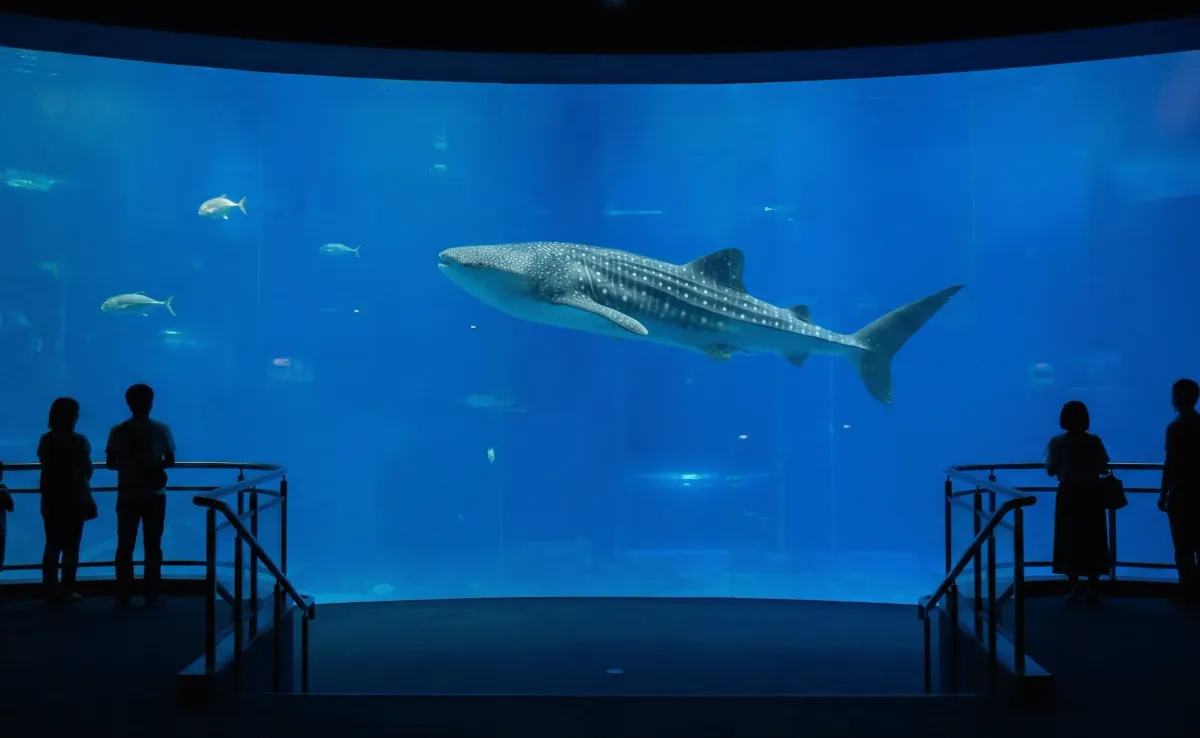
Skip the Queue: Osaka Aquarium Entry Ticket + Digital Feeding-Time Guide
Pre-booked entry to Osaka Aquarium with QR-code scan directly at the entrance — no ticket-counter queues. Includes a complimentary digital Ocean Life guide sent after booking so you…
- Skip the ticket-counter queues — scan QR code straight at the entrance
- See the whale sharks in the massive 9-metre-deep Pacific Ocean tank
- Free digital guide: animal feeding schedule + best viewing spots
- Free cancellation up to 24 hours before your visit
 from $170
Year-round
Osaka Personalized Private Tour with a Local Guide
A private, fully personalized day with a local Osaka guide that loops the aquarium in with the city's biggest sights: Osaka Castle, Dotonbori, Kuromon Market and more. The…
Runs all year, and the guide reshapes the route around your group.
- Private and fully personalized, just your group and a local guide
- Visits Osaka Aquarium plus Osaka Castle, Dotonbori and Kuromon Market
- Hotel pickup included and the guide plans the whole route
- Free cancellation up to 24 hours before, reserve now and pay later
Which Aquarium Has the Best Jellyfish Exhibit?
The Kamo Aquarium in Tsuruoka, Yamagata, has the best jellyfish exhibit in the world by commitment and species count, and its own website calls it the world's best jellyfish aquarium. About 60 jellyfish species are on show and the centrepiece is the Jellyfish Dream Theater, a 5 m diameter tank where jellyfish circulate in a ring.
The honest catch is distance. Kamo is on the Sea of Japan coast in Yamagata, so it is a trip of its own. If you want the best jellyfish exhibit that fits inside an ordinary Japan itinerary, the answer changes: the Kyoto Aquarium has a full gallery of about 30 species, and Osaka Aquarium has a jellyfish zone that closes the route in dim light.
Pick Kamo if jellyfish are the trip, Kyoto or Osaka if they are one stop among many.
Source: Kamo Aquarium, Wikipedia, Kamo Aquarium.
Jellyfish Exhibits Compared: Species, Price and Access
This table compares the jellyfish exhibits that come up most for this question. Species counts, prices and access come from each aquarium's own site except Kamo's species count, which is the figure on its Wikipedia page. US prices are not shown because they change with the visit date.
| Aquarium | Jellyfish exhibit | Species | Adult ticket | Getting there |
|---|---|---|---|---|
| Kamo Aquarium, Tsuruoka | Jellyfish Dream Theater, 5 m tank | About 60 | ¥1,500 (about $9.40) | Bus about 40 minutes from JR Tsuruoka Station |
| Kyoto Aquarium | Kurage Wonder, 360-degree tank GURURI | About 30 | ¥2,600 (about $16) | About 15 minutes on foot from Kyoto Station |
| Osaka Aquarium Kaiyukan | Jellyfish Galaxy zone, near the end of the route | Not published | ¥2,700 to ¥3,500 (about $17 to $22) | Short walk from Osakako Station |
| Aquarium of the Pacific, Long Beach | Jelly Dreamscapes | More than 40, rotating | See official site | Long Beach, California |
| National Aquarium, Baltimore | Jellies Invasion, permanent | Not published | See official site | Baltimore, Maryland |
Read the table by what you are willing to travel for. Kamo is the cheapest ticket and the biggest collection but the longest journey. Kyoto and Osaka cost more per ticket and give far more for the other half of the day, and they are the two you can fit into a first week in Japan.
Source: Kamo Aquarium, Kyoto Aquarium, Aquarium of the Pacific, National Aquarium.
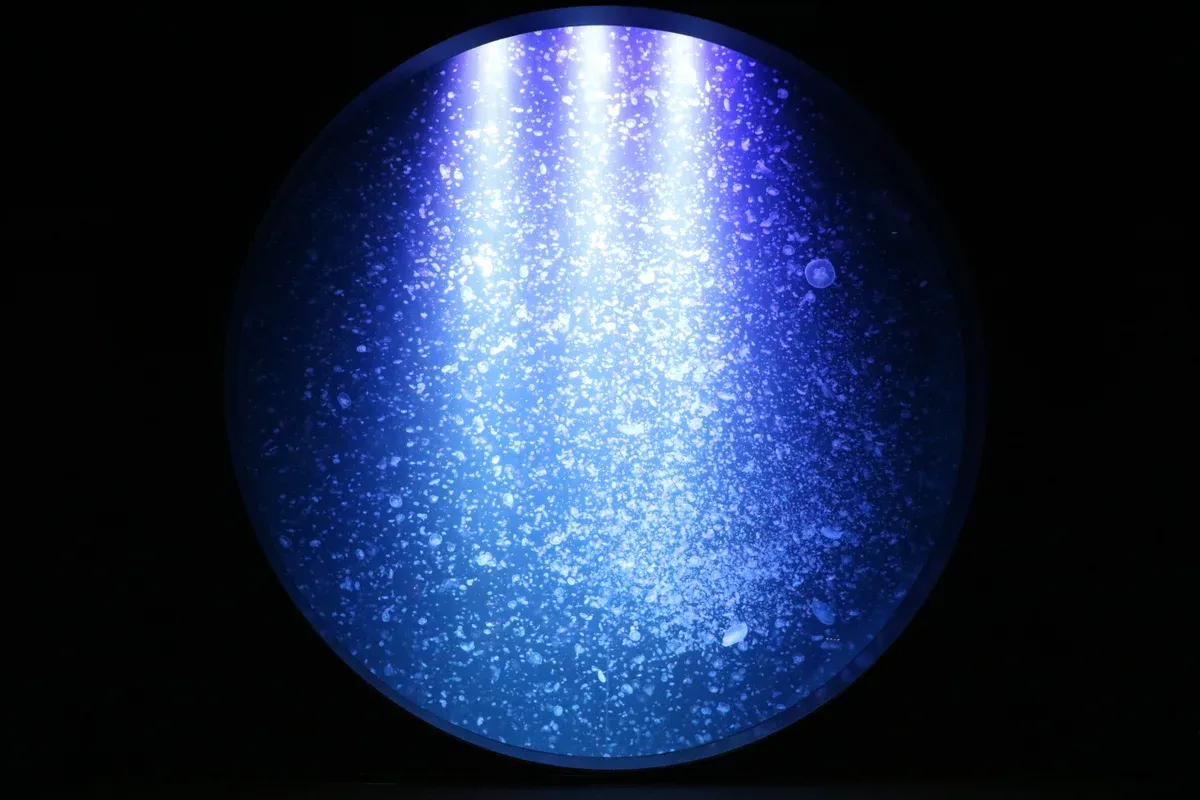
The Jellyfish Dream Theater at Kamo Aquarium. Photo: さかおり, CC BY-SA 4.0, via Wikimedia Commons
Is the Kamo Jellyfish Aquarium Worth the Trip?
Yes, if jellyfish are the reason for your trip, and not otherwise. Kamo is open from 9:00 to 17:00 every day of the year, with the reception closing at 16:00, and an adult ticket is ¥1,500 (about $9.40). The official access page says to take the Shonai Kotsu local bus bound for Yunohama Onsen from JR Tsuruoka Station, about 40 minutes to the Kamo Suizokukan stop.
A taxi from Tsuruoka takes about 30 minutes.
That makes it a day trip from Yamagata prefecture towns, or a stop on a Tohoku route, and not a detour from Tokyo or Osaka. If you are travelling the Sea of Japan coast anyway, it is the one aquarium in Japan that justifies a bus ride.
Source: Kamo Aquarium access and fees.
How Good Is the Kyoto Aquarium Jellyfish Gallery?
The Kyoto Aquarium's jellyfish gallery is the best jellyfish exhibit you can reach on foot from a major Japanese station. Kurage Wonder is on the second floor, shows about 30 jellyfish species and includes GURURI, a 360-degree panoramic tank where you stand inside the circle of animals.
An adult ticket is ¥2,600 (about $16), and the aquarium is about 15 minutes on foot from the central exit of Kyoto Station. For the full comparison with Osaka, including the giant salamander and dolphin shows, read which is better, the Kyoto or Osaka aquarium.
Source: Kyoto Aquarium, Kyoto Aquarium access.
Does Osaka Aquarium Have a Good Jellyfish Exhibit?
Yes, but it is a supporting act, not the headline. Osaka Aquarium's jellyfish zone, which the aquarium calls Jellyfish Galaxy, comes near the end of the descending route, in slow, dimly lit tanks. After the whale sharks, otters and penguins it works as a calm final stretch.
The aquarium does not publish a species count for the zone, so it cannot be compared with Kamo or Kyoto on numbers. It is also not a touch exhibit. The only hands-on stop is the Maldives pool, where visitors gently touch small sharks and rays, as described in our guide to what you will see at Osaka Aquarium.
The edge Osaka has is timing. From 17:00 the building shifts to its evening lighting, called Night Kaiyukan, and the dim light suits jellyfish tanks far better than midday crowds do. The evening session runs 17:00 to 20:00 with last entry at 19:00, so allow a brisk visit.
Our best time to visit guide covers the details.
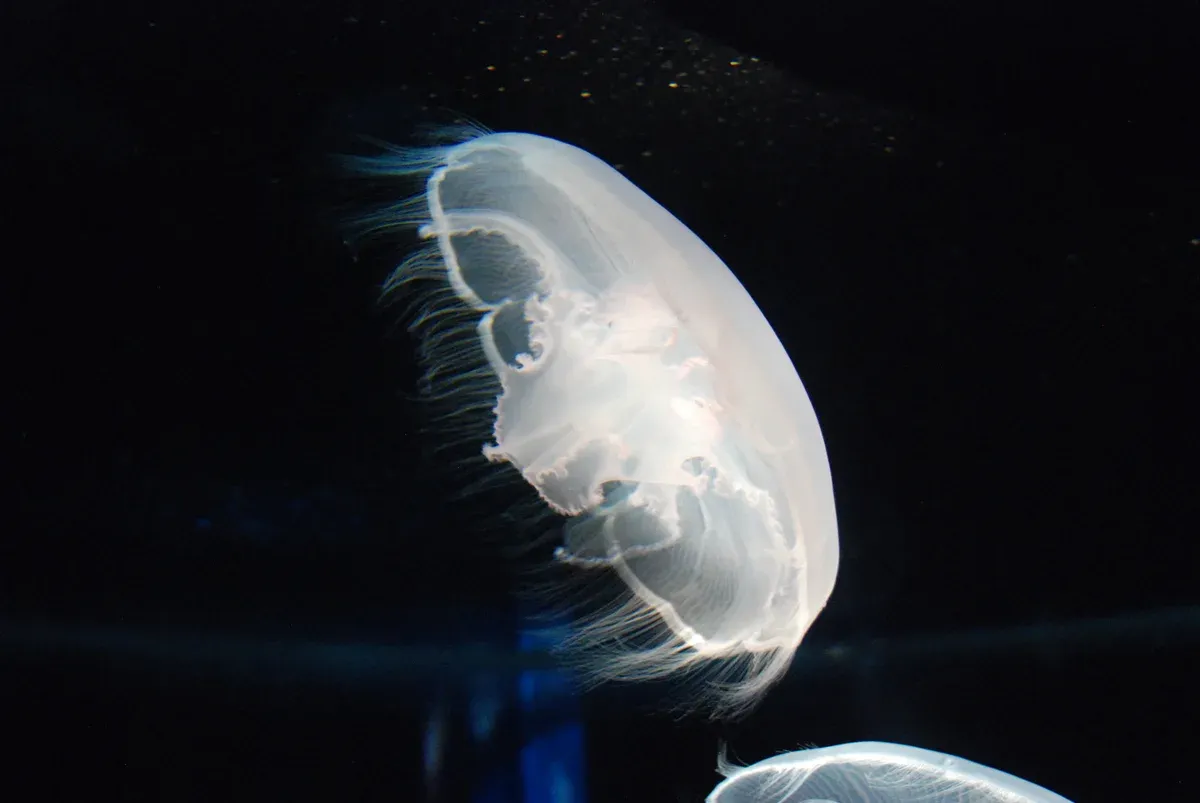
The floating jellyfish exhibition at Osaka Aquarium. Photo: Maarten Heerlien from Voorschoten, The Netherlands, CC BY 2.0, via Wikimedia Commons
What Makes a Jellyfish Exhibit Good?
Three things separate a good jellyfish exhibit from a row of tanks: the tank shape, the light and the species mix. Jellyfish are poor swimmers and get damaged in corners, so the best galleries use round or cylindrical tanks where the current carries them. Kamo's Jellyfish Dream Theater is a 5 m diameter circulating tank, Kyoto's GURURI is a 360-degree panoramic tank.
Light is the second factor. Jellyfish are transparent, so they disappear in bright rooms and glow against dark walls with soft side lighting. That is the reason the Osaka evening session after 17:00 suits them.
The third is variety. Aquarium of the Pacific rotates more than 40 species through the year, so a return visit shows something new, while Kamo's count of about 60 species is a permanent collection.
Use these three as a checklist for any aquarium you are comparing, whether it is in this table or not.
When Is the Best Time to See Jellyfish at Each Aquarium?
The opening hours decide how you plan the day, and they differ more than the ticket prices. Kamo closes at 17:00, so it is a morning-to-afternoon stop, while Osaka stays open until 20:00 and is the only one of the three with a dedicated evening lighting session.
This table compares opening hours and the best window for the jellyfish at the three Japanese aquariums. Kamo and Osaka times come from each aquarium's own pages, and Kyoto publishes its hours on a daily calendar.
| Aquarium | Opening hours | Last admission | Best window for jellyfish |
|---|---|---|---|
| Kamo Aquarium | 9:00 to 17:00, open all year | 16:00 at reception | Morning, to leave time for the bus back |
| Kyoto Aquarium | Daily calendar on the official site, no regular closed days | One hour before closing | Any time, the gallery is indoors |
| Osaka Aquarium | Usually 10:00 to 20:00 | 19:00 | After 17:00, in the dimmer evening lighting |
If you have a choice of day at Osaka, a weekday keeps the ticket at its cheapest band, see our ticket guide, and our Osaka Aquarium tickets page lists the options for a fixed date.
Source: Kamo Aquarium, Kyoto Aquarium access, Osaka Aquarium Kaiyukan.
Which US Aquariums Have Notable Jellyfish Exhibits?
The three US aquariums that come up most are Aquarium of the Pacific, Monterey Bay Aquarium and the National Aquarium in Baltimore. Aquarium of the Pacific in Long Beach shows hundreds of sea jellies in its Jelly Dreamscapes gallery and rotates more than 40 species through the year.
The National Aquarium in Baltimore began Jellies Invasion as a temporary exhibit, and kept it as a permanent one because of its popularity. It raises thousands of jellies a year at its culture lab next door. Monterey Bay Aquarium's Into the Deep gallery shows North America's largest collection of deep-sea animals, including transparent glowing jellyfish, and U.S. News notes that many guests enjoyed the jellyfish most.
If you are comparing these with Japan, Kamo still shows the larger count of species at a lower ticket price.
Source: Aquarium of the Pacific, National Aquarium, U.S. News.
What Is the Biggest Jellyfish Aquarium in the World?
The Kamo Aquarium is the largest dedicated jellyfish aquarium that publishes a species count, at about 60 species, and it is the one that calls itself the world's best. Species count is the figure these aquariums publish, so it is the one the table above uses. A claim of a single biggest jellyfish aquarium by tank volume has no published number behind it.
Where Can You Touch a Jellyfish at an Aquarium?
None of the Japanese aquariums on this page lets visitors touch jellyfish. Osaka's Maldives pool is for small sharks and rays, and Kyoto and Kamo are viewing exhibits. Jellyfish sting, which is why most aquariums keep them behind glass.
Pick Your Jellyfish Aquarium
If jellyfish are the main reason for your trip
go to the Kamo Aquarium and plan the 40-minute bus from Tsuruoka.
If you are in Kyoto with a free two hours
walk to the Kyoto Aquarium's Kurage Wonder, about 30 species at ¥2,600.
If you want jellyfish plus whale sharks in one visit
book Osaka Aquarium and go for the evening session after 17:00.
If you are visiting the United States
Aquarium of the Pacific has the largest rotating species list of the three US options.
Frequently Asked Questions
What aquarium has the best jellyfish?
The Kamo Aquarium in Tsuruoka, Japan, with about 60 jellyfish species and a 5 m Jellyfish Dream Theater tank. In a major city, the Kyoto Aquarium's Kurage Wonder shows about 30 species.
How much does the Kamo Jellyfish Aquarium cost?
An adult ticket is ¥1,500 (about $9.40), open 9:00 to 17:00 with reception closing at 16:00.
Does Osaka Aquarium have jellyfish?
Yes, in the dimly lit Jellyfish Galaxy zone near the end of the route. The best lighting is the evening session from 17:00, and a reserved-entry ticket helps on busy dates.
Can you touch jellyfish at Osaka Aquarium?
No. The Maldives touch pool is for small sharks and rays, see our kids guide.
How long does the Kyoto Aquarium jellyfish gallery take?
Kurage Wonder is one gallery on the second floor of the Kyoto Aquarium, with about 30 species. See our Kyoto vs Osaka comparison for the rest of the building.
Which Japanese aquarium is the most famous?
Okinawa's Churaumi and Osaka's Kaiyukan lead most lists, see the most famous aquarium in Japan.